1. Elephants and Surin

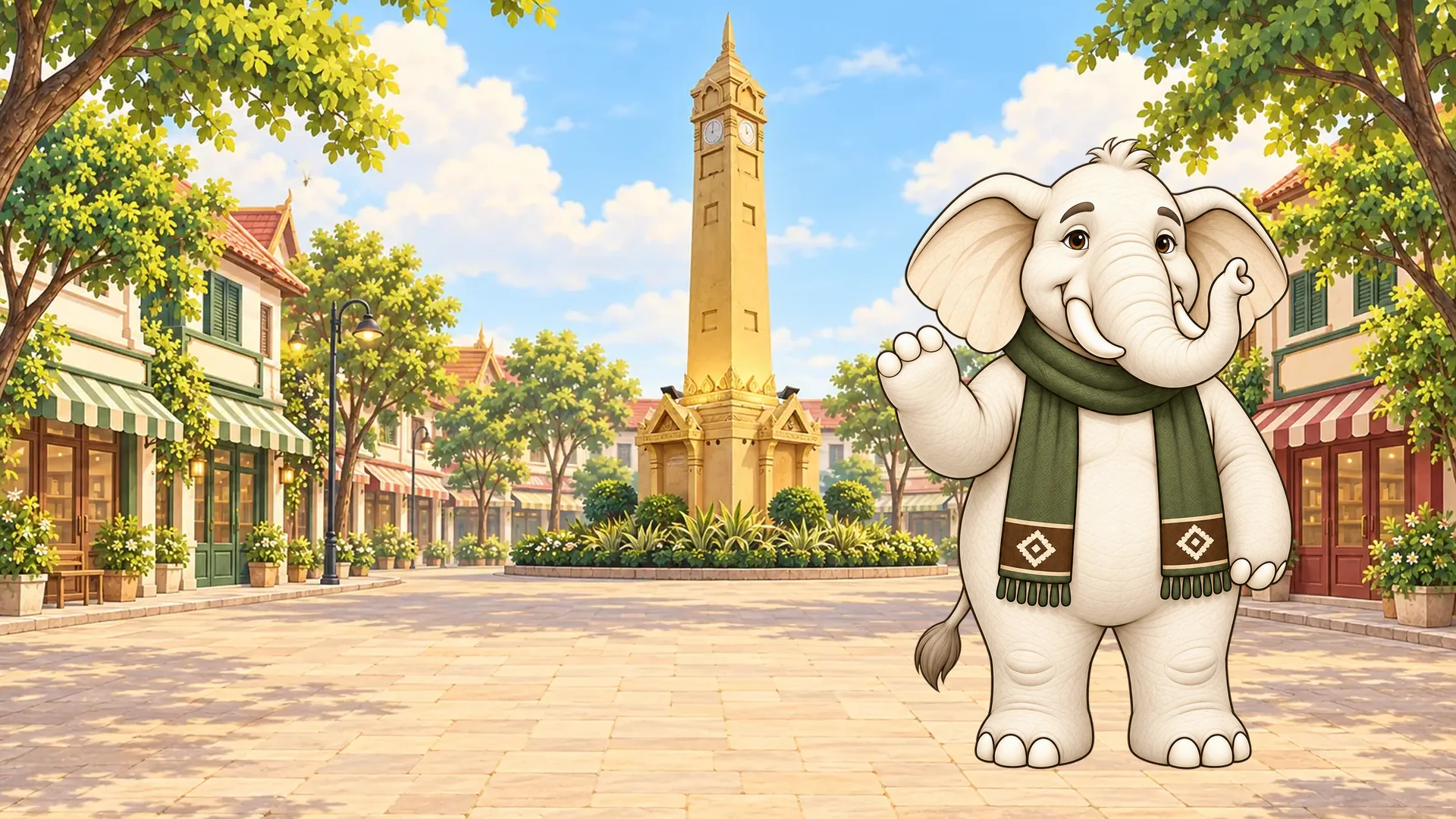
Phlai Surin: "Hello! My name is Phlai Surin, and my home is the Elephant City. Let's find out why the people of Surin and elephants share such a close bond."
The Kui people — elephant keepers
[Fact]
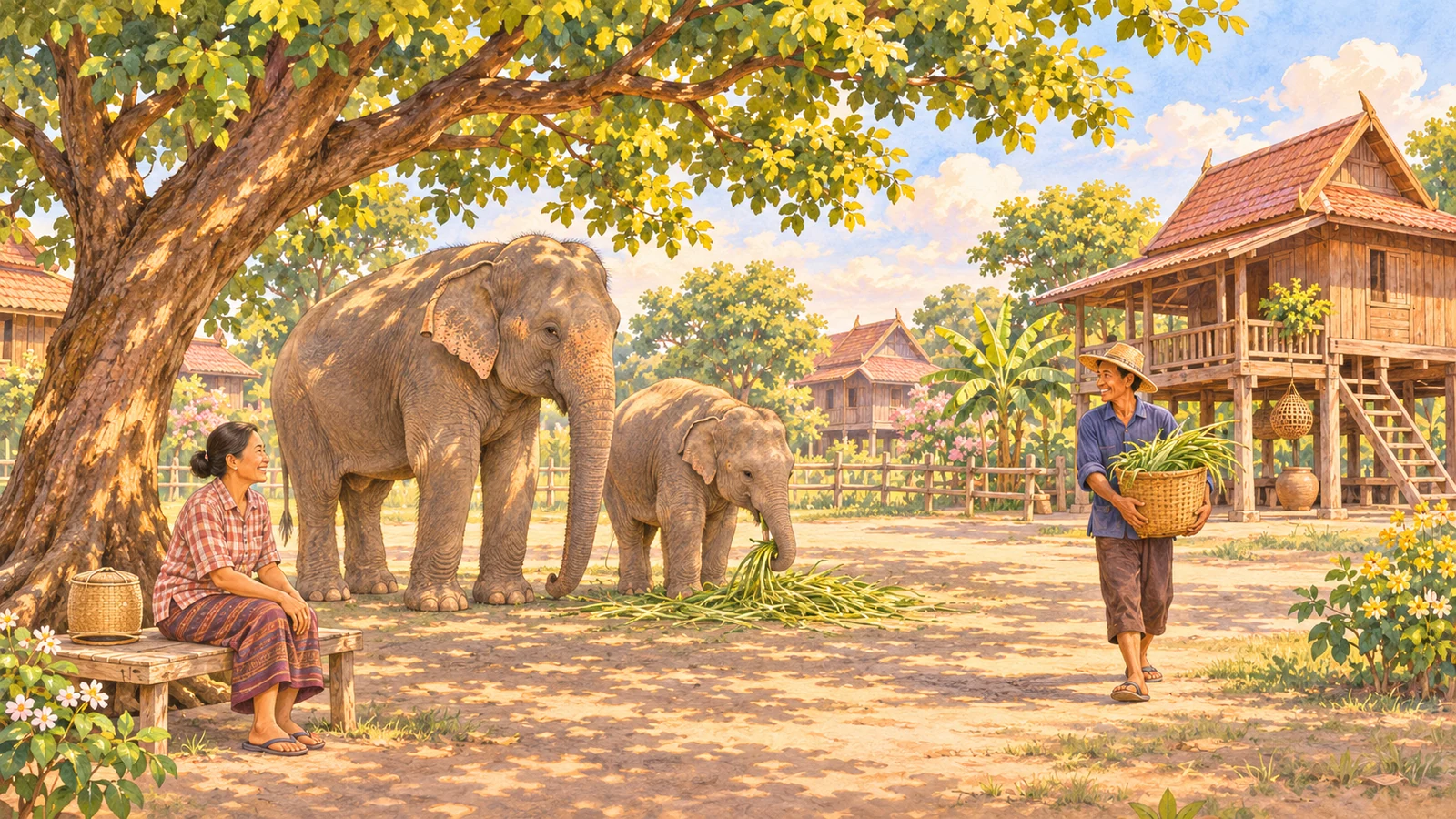
The Kui (Kuy) people (pronounced "Kuay" or "Koy" in some areas) are an ethnic group who have lived in southern Isan (northeastern Thailand) for a long time, and they are most numerous in Surin Province. Some Thai people used to call them "Suay", but the name the Kui use for themselves is "Kui", which means "people".
[Fact]
The Kui language belongs to the Austroasiatic language family (the same family as Khmer and Mon).
[Fact]
Research by the Princess Maha Chakri Sirindhorn Anthropology Centre records that the Kui are bonded to their elephants like family members and regard elephants as both a heritage and important property. The same work states that the ancestors of the Kui came from southern Laos and northwestern Cambodia.
Phon chang — traditional capture of wild elephants
[Fact]
In the past, Kui elephant keepers went out to catch wild elephants by lassoing them, a practice called "phon chang" (traditional elephant lassoing). The elephant masters, called "mo chang", used a lasso known as the "pakam" rope to catch an elephant's leg and then tied it to a tree. Captured elephants were brought back and trained to work.
[Fact]
Pakam rope is made from buffalo hide cut into strips, dried in the sun, and twisted together. One study states that a single rope is about 50–80 metres long and takes the hides of about 3 buffaloes.
[Fact]
Today, catching wild elephants is no longer possible, because Thai law gives wild elephants full protection (see Section 2). Knowledge of phon chang therefore lives on in rituals, stories, and performances.
Pakam and the saen pakam ceremony
[Fact]
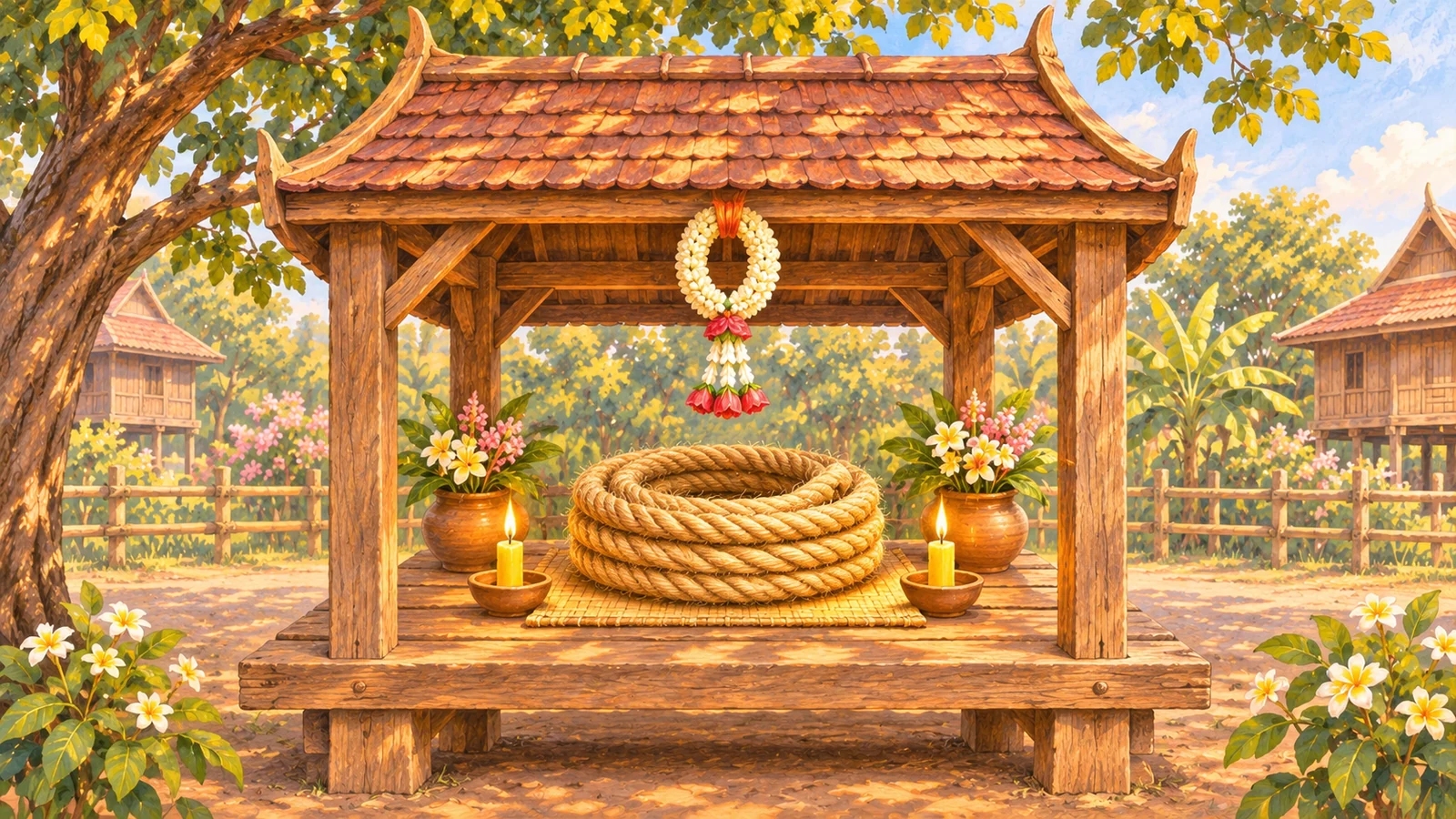
For Kui elephant keepers, the pakam rope is not just a tool but a sacred family object. The Kui believe that a rope which has gone through the proper rites becomes the dwelling place of the "phi pakam" — the spirits of ancestors and teachers who were once elephant masters — who can bring both blessings and harm.
[Fact]
Pakam ropes are kept in a "san pakam" (pakam shrine), a raised wooden shrine on four posts, set some distance away from the house. There are clear taboos, for example: do not step on the rope, and women or people from outside the family must not touch the rope or go up into the shrine.
[Fact]
The "saen pakam" ceremony (making offerings to the pakam spirits) is performed by senior elephant masters, the head of the household, and relatives. They bring offerings to the shrine, light candles, and invite the pakam spirits to receive the offerings. Only men from the family that owns the shrine may go up into it; everyone else sits around it on the ground.
[Fact]
The Kui hold saen pakam before any undertaking involving elephants — such as going out to lasso elephants, training elephants, or taking elephants to work in other places — and also every year, because they believe it helps work go smoothly and brings good luck.
[Fact]
The idea of "Khru Pakam" (the pakam teachers) also appears in old manuscripts. A scholar who surveyed elephant manuscripts in the National Library found legends of Khru Pakam in treatises on elephant lore ("khotchakam"), and found that these legends were influenced by Brahmanical-Hindu beliefs.
Ban Ta Klang and the Elephant Study Centre
[Fact]
The Elephant Study Centre (ศูนย์คชศึกษา) is at Ban Ta Klang (Ta Klang Village), Krapho Subdistrict, Tha Tum District, Surin Province. It is a community of Kui elephant keepers, and the community's pakam shrine is inside the centre.
[Fact]
The centre has an elephant museum divided into zones, such as elephants in Thai history, knowledge about elephant life (with skeletons and life-size models), fossils of prehistoric elephants found in Thailand, and an art exhibition room. There is also an elephant cemetery, where elephants that have died are laid to rest with respect.
The Surin Elephant Show
[Fact]
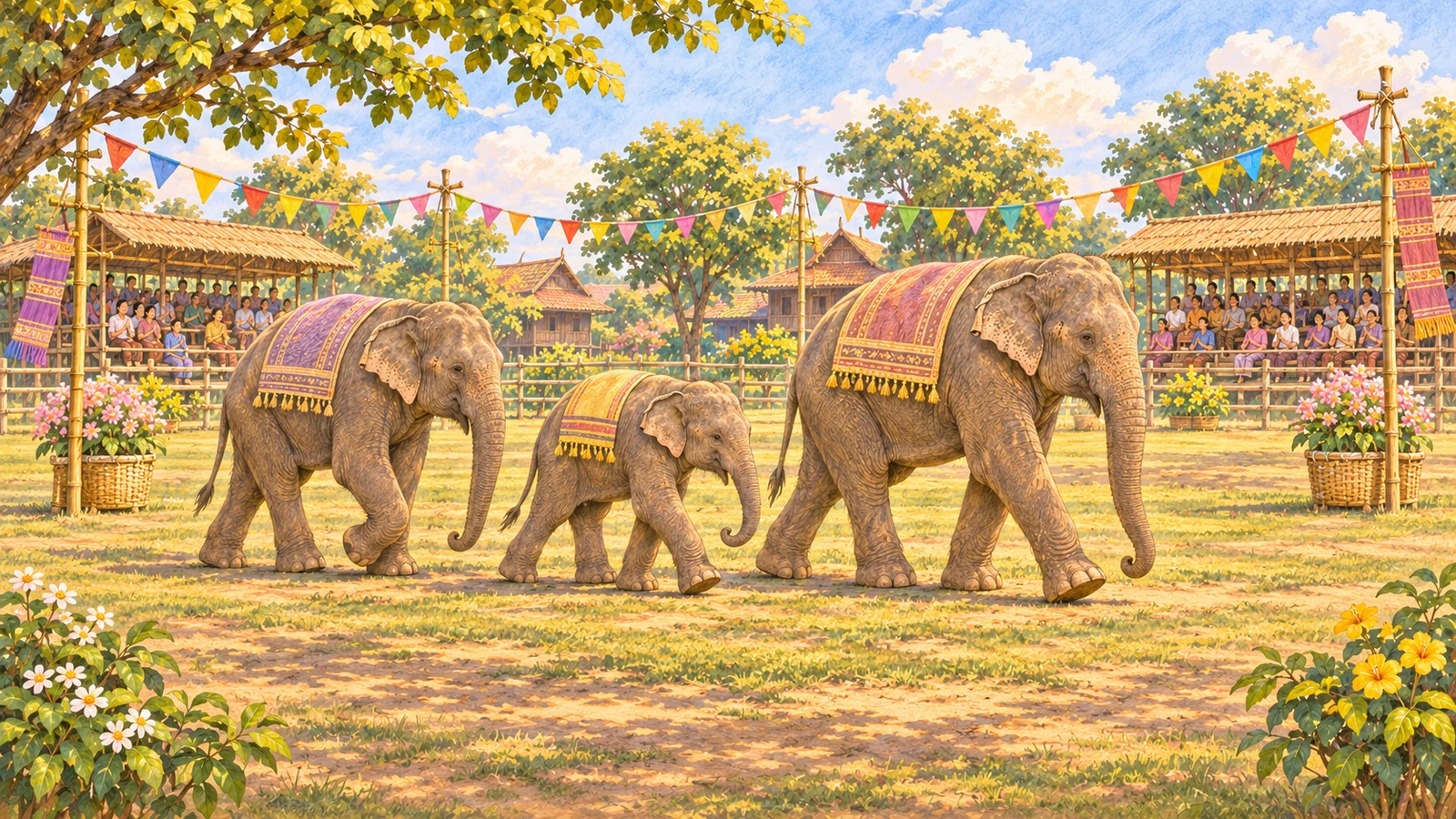
The first elephant show was held on 19 November 1960 in Tha Tum District to celebrate the new district office. At the old airfield (now Tha Tum Prachasoemwit School), there was an elephant parade, an elephant-lassoing demonstration, and elephant races.
[Fact]
Later, in 1962, the Cabinet approved making it a national annual event, and it moved to the Surin Provincial Stadium in the town centre.
[Fact]
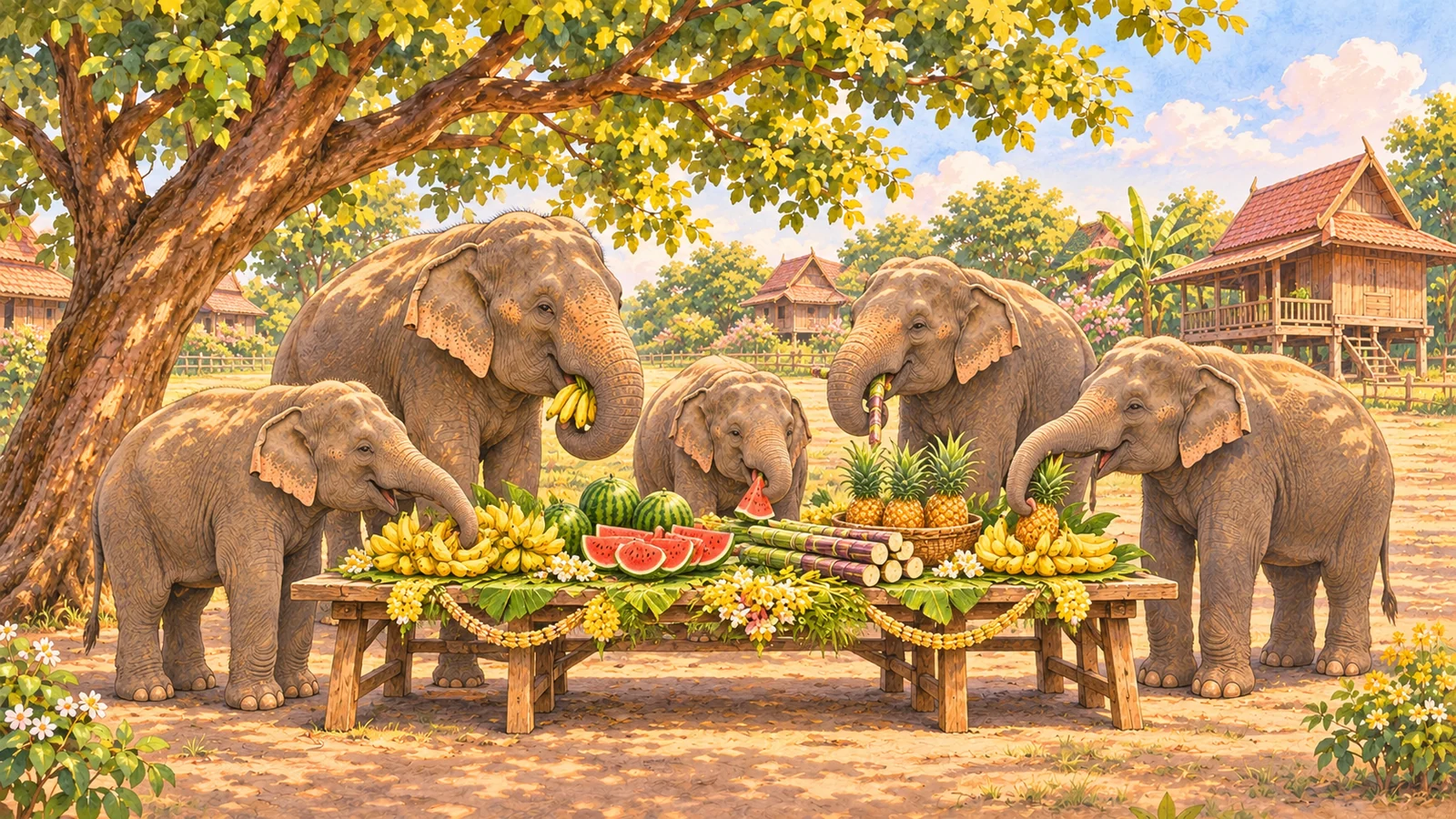
The event is held every year from mid to late November, and the big elephant show usually falls on a weekend in that period. For example, in 2020 the main show was held on 21–22 November, with an elephant feast and performances at the elephant show ground. The event honours the way of life of the Kui people and their elephants.
Elephants in the provincial seal and slogan
[Fact]
Surin Province's official slogan is "สุรินทร์ ถิ่นช้างใหญ่ ผ้าไหมงาม ประคำสวย ร่ำรวยปราสาท ผักกาดหวาน ข้าวสารหอม งามพร้อมวัฒนธรรม" ("Surin: land of great elephants, beautiful silk, beautiful silver prakuam beads, rich in ancient stone sanctuaries, sweet preserved radish (phak kat wan), fragrant rice, and complete with fine culture") — elephants come first.
[Fact]
Surin's provincial seal also features an elephant. You can see the seal on the province's website.
2. Getting to Know Thai Elephants
Phlai Surin: "I'm big, but I'm kind-hearted! Let's get to know my body a little."
What is an Asian elephant?
[Fact]
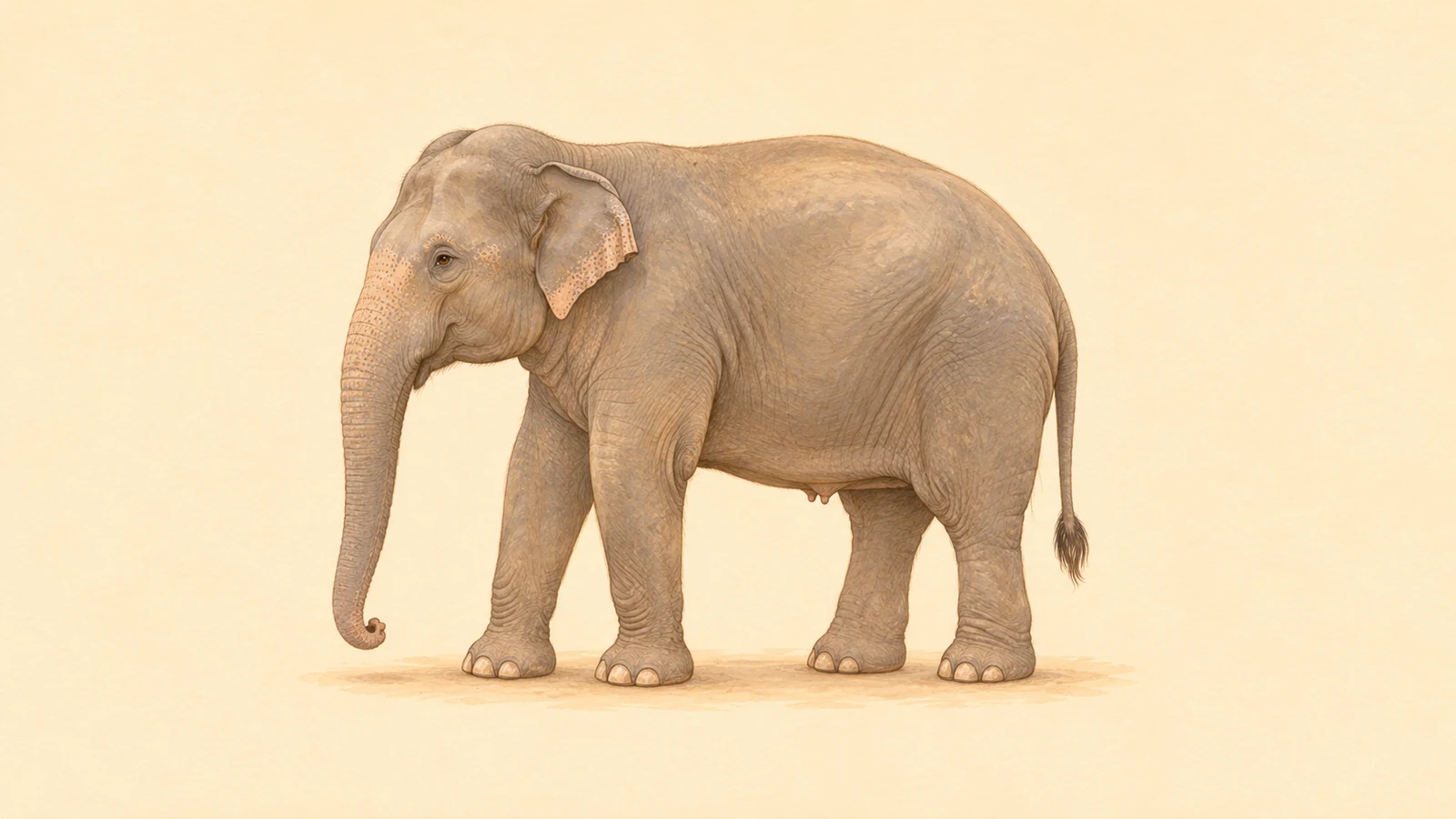
Thai elephants are Asian elephants, scientific name Elephas maximus. They are slightly smaller than African elephants. Adult elephants stand about 1.8–3.8 metres tall at the shoulder and weigh about 2,750–5,420 kilograms. Males are usually taller than females.
Parts of the body
- Trunk
- Ear
- Tusks (not visible)
- Legs and feet
- Tail
[Fact]
The trunk is the nose and upper lip joined together. It has no bones at all, but lots of muscles. The tip of the trunk has a small "finger" for picking up small things, and one trunk can hold about 7.5 litres of water.
[Fact]
The ears help release heat, because they contain many blood vessels. Elephants walk on their tiptoes, with thick, soft pads of tissue under their feet.
Lifespan, food, and family
[Fact]
Asian elephants often live to around 50-plus years (data on wild elephants is still limited). Pregnancy lasts about 21.5–22 months, the longest of any animal.
[Fact]
Elephants eat only plants, such as grass, leaves, bark, and roots. They spend about three-quarters of each day eating and walking around in search of food, need to eat about 74–150 kilograms per day, and drink about 190 litres of water.
[Fact]
Elephants live in small herds of related females and their young. Males leave the herd when they reach adolescence (about 8–13 years old). In Thai, a herd of wild elephants is called a "khlong".
How to tell a phlai, a phang, or a sido
[Fact]
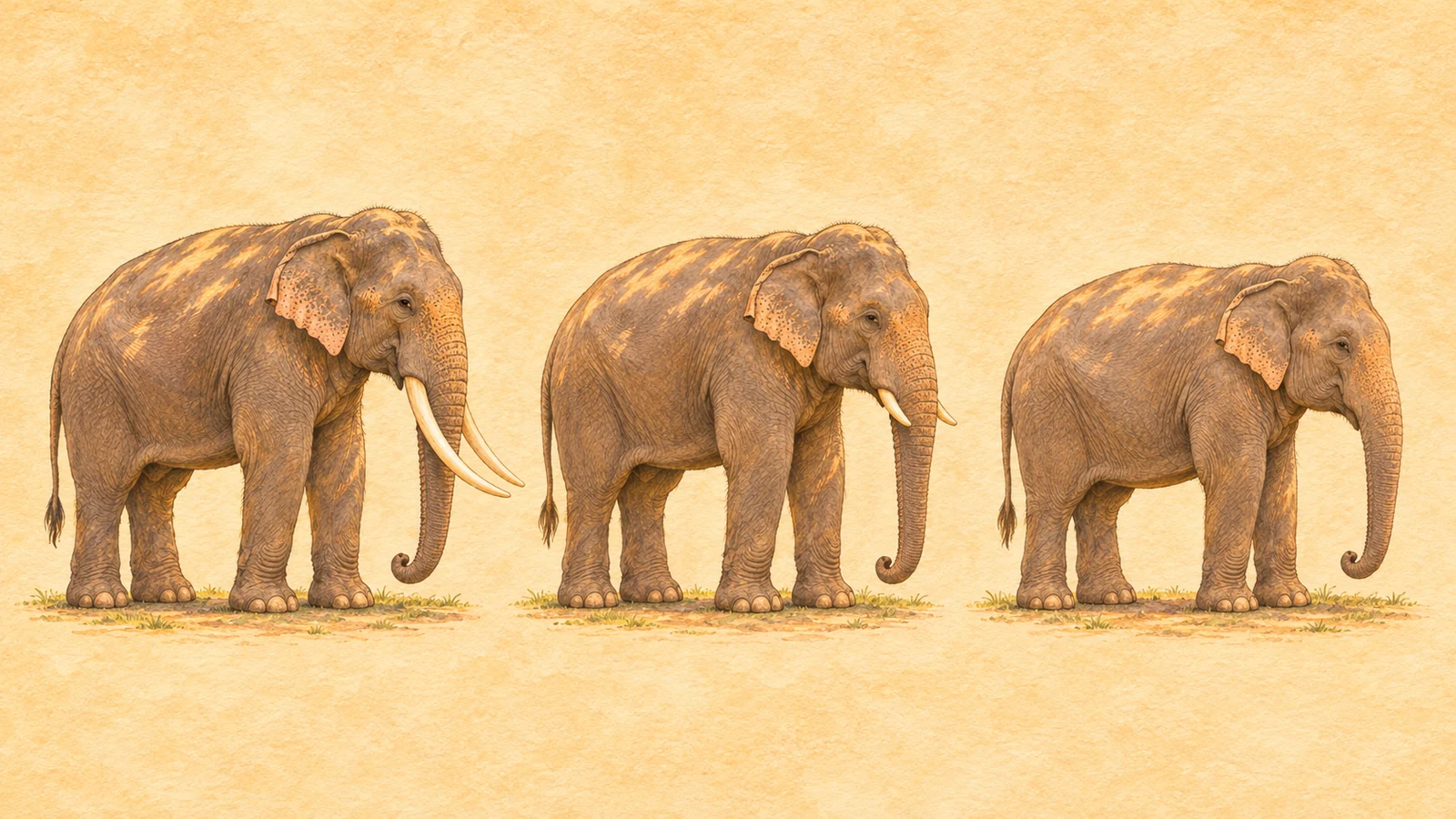
In Thai, chang phlai = a male elephant with long tusks · chang sido = a male elephant with short tusks · chang phang = a female elephant.
[Fact]
Not every male Asian elephant has long tusks. The proportion of males with tusks varies greatly from country to country. Most females have very small, short tusks, which usually do not stick out past the lips.
[Fact]
When counting elephants in Thai, wild elephants use the counting word "tua", domestic elephants use "chueak", and elephants that have been formally inducted ("khuen rawang") use "chang".
Conservation status
[Fact]
The IUCN Red List classifies the Asian elephant as "Endangered", and it has held this status since 1986. The Smithsonian estimates that there are about 37,000–57,000 Asian elephants left in the world.
[Fact]
In Thailand, a 2026 article reported more than 4,400 wild elephants and more than 3,900 domestic elephants in over 30 provinces.
[Fact]
Thailand has designated 13 March every year as "Thai Elephant Day", following a Cabinet resolution in 1998.
Domestic and wild elephants under Thai law
[Fact]
Thai law divides elephants into two groups. Wild elephants are protected under wildlife law — they may not be hunted, captured, or harmed — and capturing wild elephants has been banned since the Wild Elephants Protection Act of 1921 (B.E. 2464). Domestic (captive) elephants are treated as private property under the Beasts of Burden Act of 1939 (B.E. 2482).
[Fact]
Domestic elephants must be registered. In the past, they did not need to be registered until they were 8 years old; now they must be registered within 90 days of birth. Since 2016, captive elephants have also been microchipped and had DNA samples collected, to prevent wild elephants from being passed off with captive elephants' papers.
Being polite and safe around elephants
Phlai Surin: "If you meet me, please follow these tips!"
[Fact]
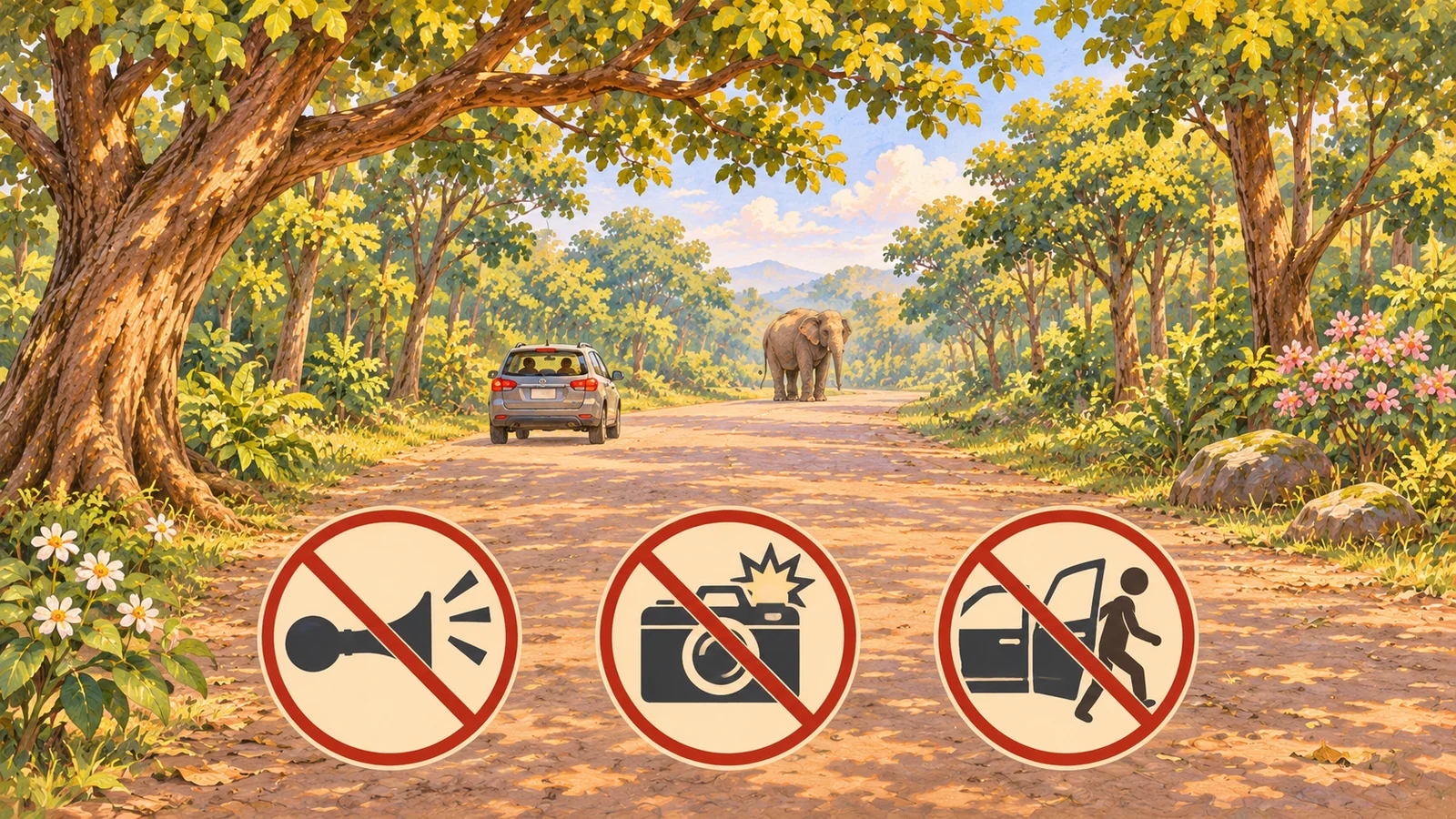
If you meet a wild elephant on the road, the Department of National Parks, Wildlife and Plant Conservation advises:
- Stop your car at least 30 metres away from the elephant. If the elephant walks towards you, slowly back your car away.
- Do not honk or make loud noises to chase it away, and do not use flash when taking photos.
- Keep your engine running. At night you may keep your headlights on, but do not turn on your hazard lights.
- Do not park and get out to take photos up close, because elephants usually live in herds and others may be nearby.
[Fact]
Domestic elephants at Ban Ta Klang and other places are cared for by mahouts. Male elephants in musth (a periodic state of heightened hormones) can be very aggressive.
Tip from Phlai Surin: "If you'd like to come close to me or feed me, please ask my mahout first!"
3. White Elephants / Royal Elephants
Phlai Surin: "This is an important subject for our nation, so I will tell it with great care."
[Fact]
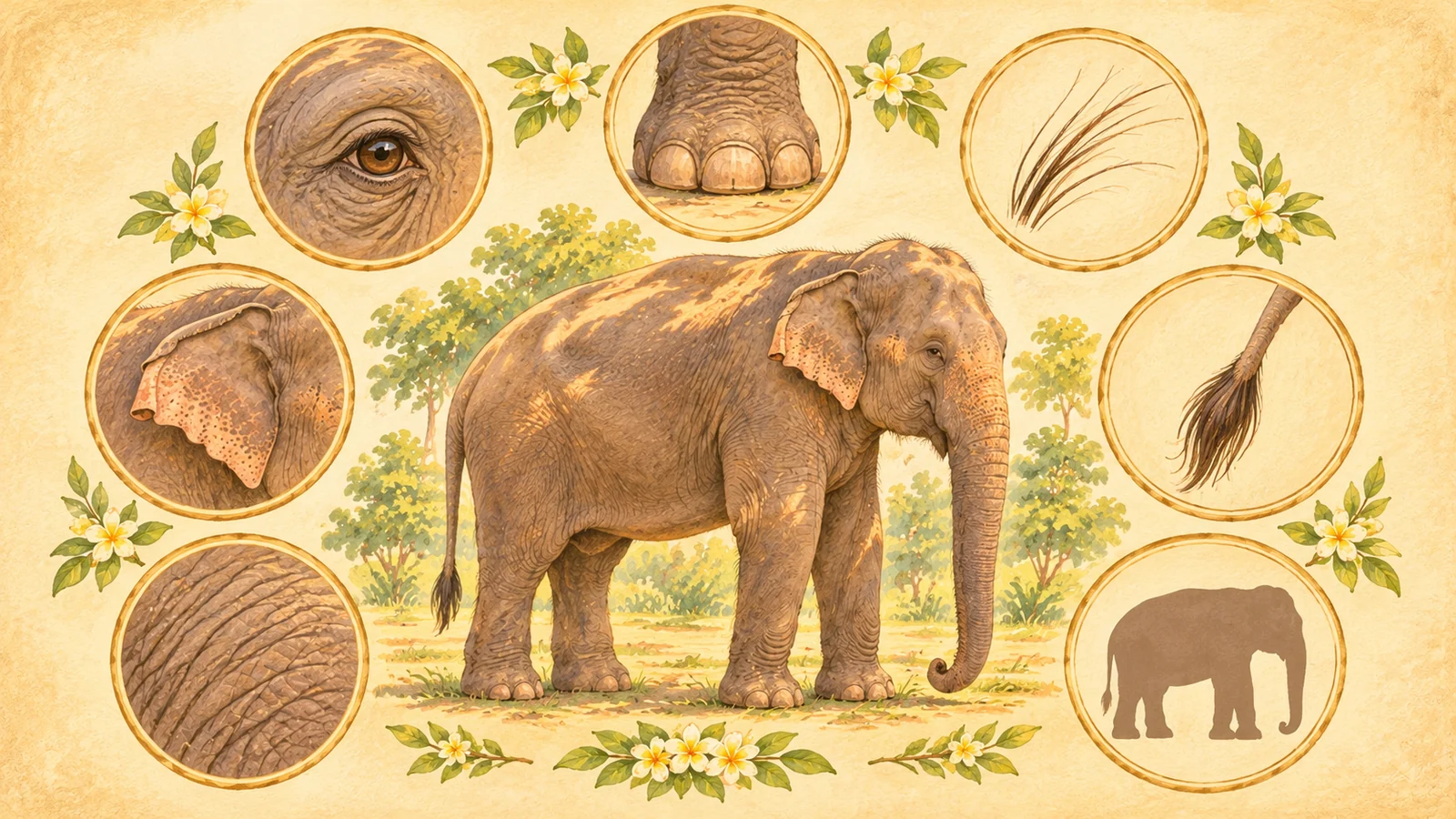
A "white elephant" ("chang phueak") is not white like paper. Treatises on elephant characteristics ("khotchalak") and the law explain that the skin of an auspicious royal elephant ("chang samkhan") may be white, or the colour of a new clay pot (a pale pinkish to reddish-brown).
[Fact]
The Wild Elephants Protection Act of 1921 (B.E. 2464) defines elephants with all 7 auspicious characteristics as follows:
- White eyes
- White palate (roof of the mouth)
- White nails
- White hair
- White skin, or the colour of a new pot
- White tail hair
- White scrotum, or the colour of a new pot
[Fact]
Academic work from Surindra Rajabhat University explains, following the traditional treatises, that an elephant with all 7 characteristics is called a "chang samkhan" (royal elephant), an elephant with only some of the characteristics is called a "chang si plat", and there is also the "chang niam", which has black skin, tusks shaped like a banana blossom, and black nails.
[Fact]
Under the same law, anyone who obtains an elephant with these characteristics — whether by capture or because their own elephant gave birth to it — must present it to His Majesty the King, and will graciously be granted an appropriate royal reward. These elephants are property of the nation and may not be bought, sold, or transferred to anyone.
[Fact]
Since ancient times, the white elephant has been an auspicious animal associated with the royal grace and majesty of the Kings of Thailand. This belief combines Buddhist and Brahmanical-Hindu traditions. Today, white elephants are protected by law and are a national symbol.
4. Legends / Stories Passed Down
Phlai Surin: "What follows are stories. Enjoy them, but please don't remember them as history just yet!"
[Legend]
The white elephant that ran into the forest — Surin's best-known story says that a white elephant once escaped from the capital and headed towards Isan. A Kui leader named "Chiang Pum" helped track it down until the elephant was recovered, and so he was granted the title "Luang Surinphakdi" — and the name of the town of Surin comes from this title. The sources that record this story disagree about which reign it happened in, and whether the elephant was presented at Ayutthaya or Thonburi.
[Legend]
The legend of Khru Pakam — Ancient treatises on elephant lore in the National Library contain stories of how the Khru Pakam, sacred objects, and the elephant-lassoing rites came to be. Researchers found that these stories are linked to the Tamra Phruetthibat (an elephant-lassoing treatise) and to the stories of the avatars of Narayana (Vishnu).
[Legend]
Pakam spirits protect the elephant masters — The Kui have long believed that the pakam spirits dwelling in the rope watch over the people who go out to lasso elephants, and that breaking the teachers' rules (such as stepping on the rope) may bring misfortune. (This is a belief recorded by researchers, not a scientific fact.)
Sources
- บัญญัติ สาลี. "กูย: ว่าด้วยกลุ่มชาติพันธุ์ ภาษา และตำนาน" (Kui: on the ethnic group, language and legends). วารสารมนุษย์กับสังคม (Journal of Man and Society) Vol. 1 No. 1 (2015)
- Article on the word "elephant" in the Kui language. วารสารแม่โขงศึกษา (Mekong Studies Journal) (TCI)
- ชื่น ศรีสวัสดิ์. การฝึกช้างของชาวกูย จังหวัดสุรินทร์ (Elephant training of the Kui people, Surin Province) (1995). Ethnic Groups Research Database, Princess Maha Chakri Sirindhorn Anthropology Centre (Public Organization)
- พระอำนวย มงฺคลิโก et al. "การศึกษาพิธีกรรมความเชื่อหมอช้างของกลุ่มชาวไทยกูย จังหวัดสุรินทร์" (A study of the rituals and beliefs of Thai Kui elephant masters, Surin Province). วารสารศิลปะและวัฒนธรรมลุ่มแม่น้ำมูล (Journal of Arts and Culture of the Mun River Basin) 11(2) (2022): 58–69
- พระครูพิมลกัลยาณธรรม กลฺยาโณ. "การอนุรักษ์พิธีกรรมแซนปะกำช้างของชาวกูย อำเภอท่าตูม จังหวัดสุรินทร์" (Preserving the Kui saen pakam elephant ritual, Tha Tum District, Surin Province). วารสารสันติศึกษาปริทรรศน์ มจร (Journal of MCU Peace Studies) 8(2) (2020): 711–725
- วริศรา โกรทินธาคม. "Khru Pakam Myth: The Tales of the Origination of Things and Tamra Phruetthibat". Damrong Journal, Faculty of Archaeology, Silpakorn University 21(1) (2022)
- Thai Post. "'ตามรอยช้าง' ศูนย์คชศึกษา สู่โลกฟอสซิลล้านปี" ('Following the elephants': the Elephant Study Centre and a world of million-year-old fossils) (1 March 2026)
- MGR Online. Article on the history of the Surin elephant event (12 November 2012)
- Tourism Authority of Thailand (TAT News). "Thailand's renowned Surin Elephant Round-up set for weekend of 21-22 November 2020"
- Smithsonian's National Zoo & Conservation Biology Institute. "Asian elephant"
- Bansiddhi P., Brown J.L., Thitaram C. "Welfare Assessment and Activities of Captive Elephants in Thailand". Animals 10(6):919 (2020)
- Thai PBS. "เรียก 'ช้าง' อย่างไร ให้ถูกต้อง" (How to refer to 'elephants' correctly) (8 October 2019), citing the Office of the Royal Society
- IUCN SSC Asian Elephant Specialist Group. Asian Elephant Red List Assessment 2020 (DOI 10.2305/IUCN.UK.2020-3.RLTS.T7140A45818198.en)
- อุษา กลมพันธ์ et al. "ช้างเผือก สัตว์มงคลคู่พระบารมี" ("White Elephant" the King's Auspicious Animal). Journal of Humanities and Social Sciences, Surindra Rajabhat University 20(2) special issue (2018)
- Government Public Relations Department. "13 มีนาคม วันช้างไทย" (13 March, Thai Elephant Day)
- Thai PBS. "10 ข้อปฏิบัติเมื่อเจอช้างป่าบนถนนเขาใหญ่" (10 things to do when you meet wild elephants on the road at Khao Yai) (11 December 2018), advice from the Department of National Parks, Wildlife and Plant Conservation
- Office of the Council of State. Wild Elephants Protection Act B.E. 2464 (1921) (unofficial translation; Royal Gazette Vol. 38, p. 75, 26 June 1921)
- THAILEX. "Phraya Surin Phakdi Sri Narong Changwang"
- Thai-Tour. "Surin Introduction"
- Surin Province. "คำขวัญประจำจังหวัด" (Provincial slogan)
- Surin Province. "ตราประจำจังหวัด" (Provincial seal)